Before the cold set in, you likely winterized your RV to keep it safe if you plan to put it in storage. Now spring brings longer days, warmer weather, and the promise of road trips, barbecues, and beach adventures. It is also the best time to bring your RV out of storage and get it ready for the open road. Dewinterizing an RV is more than a quick rinse and a cursory glance at your RV systems. It is a yearly ritual that protects your investment and sets you up for a season of safe, hassle-free travel.
Dewinterizing an RV is a deliberate, multi-step process that ensures your RV is safe, functional, and comfortable before you ever turn the key. You will inspect critical systems, including the chassis, tires, exterior seals, electrical and propane systems, and the freshwater network. You will also bring your RV appliances back online and make sure they work the way they should. Skipping or rushing this process can lead to expensive RV repairs and even dangerous situations.
Exterior & Chassis Dewinterization Inspection
Thorough Exterior RV Inspection
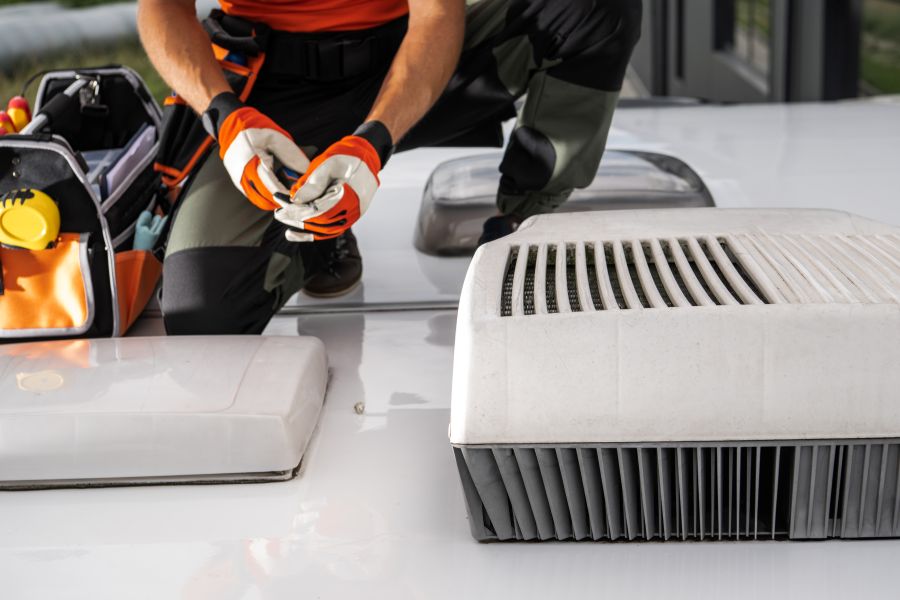
Start with a slow, methodical walk around your RV. Look closely at the body, roof, and slide-out seams for any signs of cracking, separation, soft spots, or structural damage. Focus on areas where water could pool during rain or where snow and ice may have accumulated over winter. Check spots like along the roof edges, around gutters, and at the tops of slide-outs. Pay special attention to roof vents, antenna mounts, skylights, and ladder anchor points, since these are common leak paths where sealants can break.
Next, inspect the weatherstripping and sealant around every window, door, hatch, and storage compartment. Look for caulk that is cracked, dried out, peeling, loose, or completely missing. Any compromised seals should be removed and replaced to prevent leaks, which is the number one enemy of an RV owner. Use non-sag or standard caulk on vertical surfaces so it stays in place. Reserve self-leveling sealant for the roof, where it can flow out and create a smooth, watertight barrier around seams.
If you have a towable RV, such as a travel trailer or fifth wheel, spend extra time on the hitch area. Inspect the kingpin or ball receiver, safety chains, and the breakaway cable. The trailer coupler mechanism should operate smoothly and lock securely without binding. Look for deep rust, bends, cracks, and other structural damage. Plus, lubricate all pivot points, jack mechanisms, and moving parts so they operate freely when you are hitching, unhitching, or leveling at your first campsite of the season.
Tires and Wheels
Start dewinterizing an RV with a thorough tire check to ensure safe travel. Begin by checking your tire pressure with a quality, reliable gauge, and do not forget the spare if your RV has one. Inflate each tire to the manufacturer’s recommended cold PSI. This information is often printed on the tire sidewall, but the more reliable reference is your RV’s internal placard. Make sure the tire pressure you choose is appropriate for the weight you expect to carry once your RV is packed.
After inflation, inspect every tire carefully. Look for cracks in the sidewalls(dry rot), as well as bulges, cuts, or embedded debris. Scan the tread for uneven wear patterns that might indicate misalignment or suspension issues, and look for flat spots that can develop when RVs have been parked in one position for too long. Locate the DOT date code on the sidewall and check the age of each tire. Even if tread depth appears fine, tires more than five to seven years old should be considered for replacement because internal materials can break down over time.
If you are comfortable doing so, verify the torque on the lug nuts using a calibrated torque wrench and the manufacturer’s recommendations. Properly torqued lug nuts help protect the wheel studs and prevent warped brake components.
Engine and Generator Checks
For motorized RVs, pop the hood and start with the engine fluids. Check the engine oil, brake fluid, power steering fluid, transmission fluid, and coolant. Each should be within the correct range on its dipstick or reservoir and should appear clean and not discolored. Fluids that are low, excessively dark, gritty, or milky can indicate leaks or contamination and should be topped off or changed.
Inspect belts and hoses throughout the engine. Check for cracks, fraying, stiffness, swelling, or glossy glazed surfaces. Cold winter can accelerate deterioration, so anything that looks marginal now is likely to fail during the busy travel season. Once everything appears alright, start the engine and let it run for several minutes. Monitor your dashboard gauges for normal readings, and test all your lights. Cycle the windshield wipers and washer fluid to confirm they operate correctly and that the blades are not dried out or streaking.
Don’t forget to take care of your RV’s generator as well. Check the generator’s oil level and inspect the entire exhaust system for cracks, damage, or any blockage. If the generator has not been used for many months, you may need to follow the manufacturer’s directions to prime the fuel system before starting.
Once it is ready, run the generator for at least two hours with a half-rated load. This might mean running the air conditioner along with another high-draw appliance, like the microwave. Operating the generator under load is important because it exercises the windings, helps keep the electrical components healthy, and reduces the likelihood of carburetor and fuel system issues later in the season.
Core Systems De-Winterization: Water and Power
Power System: Battery Charging and Reinstallation
The first step is to turn off every power source. Nothing should be energized while you are connecting or disconnecting battery cables or working around the battery terminals. This simple check helps prevent short circuits, sparks, and accidental shocks.
Use a voltmeter to check the state of charge before you do anything else. A fully charged 12-volt lead-acid battery should read around 12.7 volts at rest. A fully charged lithium (LiFePO4) battery will be higher, around 13.4 volts. If your readings are significantly lower, plan on a full charge cycle and possibly a load test to confirm the battery is still healthy.
For flooded lead-acid batteries, remove the vent caps and inspect the fluid level in each cell. The plates should always be covered. If any plates are exposed, add distilled water before connecting the battery to a charger. If the plates are covered but the level is low, wait until after charging to top off. Never use tap water because minerals can shorten battery life. While you are there, look for white or bluish corrosion on the terminals and cable ends. Clean corrosion with a paste made of baking soda and water, scrub with an appropriate brush, then rinse thoroughly and dry.
Connect the RV to a smart charger and allow the battery to charge fully, or use shore power if your RV’s converter includes a smart charging profile. Smart chargers adjust voltage and current as the battery charges, which helps prevent overcharging and extends battery life.
Once the battery is fully charged, reinstall it. Attach the cables to clean terminals, making sure the positive and negative connections are correct and tight. Apply a light coat of corrosion prevention spray or dielectric grease to the terminals to reduce future buildup. Before turning the disconnect switch back on or reapplying shore power, inspect all 12-volt fuses and circuit breakers. Replace any blown fuses or damaged breakers, and only then bring the system back online.
Water System: Antifreeze Flush
With power under control, turn your attention to the plumbing. The goal of this step is to remove residual RV antifreeze, often called “the pink stuff,” from every line and fixture so the system is safe and pleasant to use.
Start by checking the water filtration components. Make sure the filter housing is empty and that any bypass valve for the filter is engaged. If you removed the filter cartridge for winterization, leave it out for now so it does not become saturated with antifreeze during the flush.
If non-toxic RV antifreeze was added to the freshwater holding tank for storage, drain that tank completely. Use the low-point drains and fresh tank drain as directed in your owner’s manual.
Next, turn the water heater off and take it out of bypass mode. Locate the bypass valves, usually a set of valves on the plumbing lines at the back of the water heater, and move them to the normal operating position so the tank can fill again. Do not turn on the gas or electric power to the heater yet; it must be full of water first.
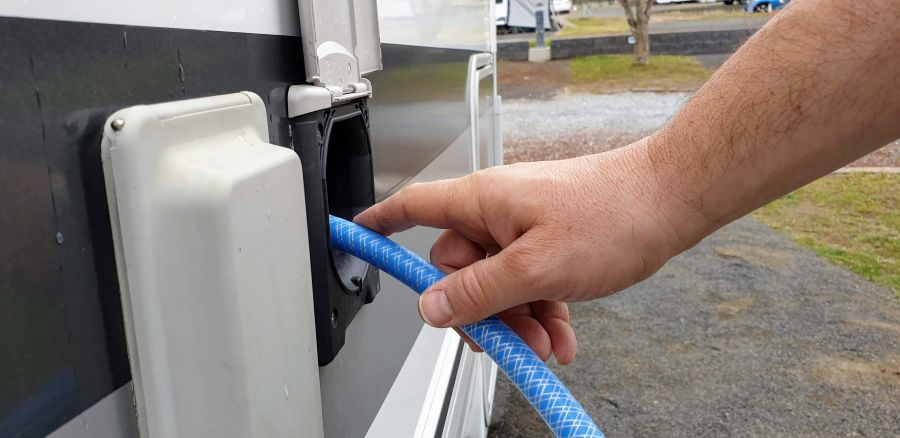
Connect a potable-water-only hose to the city water connection or begin filling the freshwater tank with clean water. Turn on the water pump if you are drawing from the tank. One fixture at a time, run fresh water through the entire system: kitchen and bathroom sinks, indoor and outdoor showers, toilet, and any washing machine or other water-using appliances. Let each run until the water is completely clear and you no longer see or smell the pink antifreeze.
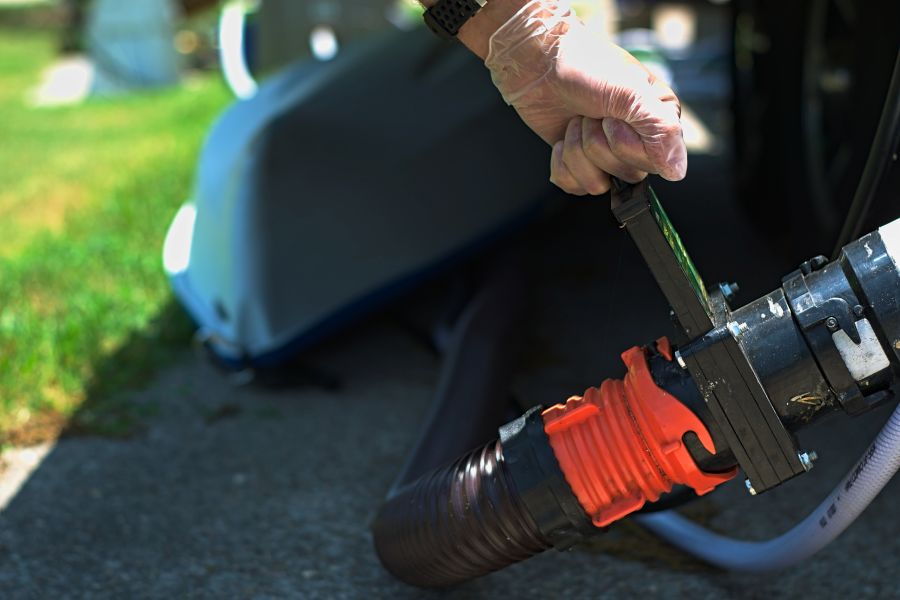
As the system flushes, the used antifreeze and water mixture will collect in the gray and black holding tanks. Once the water lines run clear, drive to an RV dump station to empty both tanks. This completes the initial antifreeze flush and prepares your water system for sanitizing.
Water System: Sanitization
Flushing you water lines removes antifreeze, but sanitizing them ensures the fresh water system is clean and safe to drink from after months in storage. This step helps eliminate bacteria, mold, and stale odors that can develop in tanks and plumbing lines.
Begin by closing all drains and reinstalling any drain plugs or caps you removed earlier. Confirm that low-point drains, the fresh water tank drain, and the water heater drain plug or anode rod are secure.
Prepare a sanitizing solution with plain, unscented household bleach. The standard mix should contain1/4 cup of bleach for every 15 gallons of fresh water tank capacity. For example, a 60-gallon tank would require 1 cup of bleach. Always dilute the bleach first by mixing the measured amount with about a gallon of water in a separate bucket. Then add the diluted solution to your freshwater tank through the gravity fill port or by siphoning according to your manufacturer’s instructions.
Once the bleach solution is in the tank, fill the fresh water tank with clean water. Turn on the water pump and open each fixture one at a time. Check all faucets on both hot and cold sides, along with shower heads and the toilet valve, until you can clearly smell bleach at each outlet. This confirms that the solution has reached the entire plumbing network, including the water heater. When every fixture has drawn treated water, turn them all off.
Let the sanitizing solution sit in the system for at least 3 hours and up to 12 hours. Do not leave it in the lines longer than 24 hours. This contact time is what actually disinfects the system.
After the soak period, drain the fresh water tank and open faucets to empty as much of the bleach solution as possible. Refill the tank with clean, fresh water and flush the system by running water through all fixtures. Repeat this process until the bleach smell is completely gone; this often requires 2 to 4 full tank flushes.
If there is any lingering chemical taste or odor, you can add a tablespoon of baking soda mixed with water down each sink and shower drain, then flush with fresh water. This helps neutralize residual bleach odors and can also clear any antifreeze taste that might remain in your P-traps.
Water Heater Tank Maintenance
If the water heater was not properly bypassed during RV winterization or if you are unsure whether that step was done, take a moment now to service the tank. Turn off all power and fuel to the heater, then remove the drain plug or anode rod and allow the tank to drain completely.
For suburban-style water heaters that use an anode rod, inspect the rod carefully once it is out. The anode rod is a sacrificial metal component that corrodes instead of the tank lining. If it is heavily pitted, badly corroded, or worn down to less than half of its original diameter, replace it with a new rod before refilling the heater.
Use a water heater flushing wand attached to a garden hose to rinse the inside of the tank. Insert the wand through the drain opening and spray in multiple directions to stir up and remove any sediment that settled at the bottom during storage. Removing this buildup improves heating efficiency and can extend the life of the tank.
When flushing is complete, reinstall the drain plug or new anode rod and tighten it according to the manufacturer’s instructions. Make sure the water heater is still turned off, then allow the fresh water system to refill the tank. Open a nearby hot water faucet and wait until a steady stream of water (without spurts of air) flows from the tap. This confirms that the tank is completely full. Only after the tank is filled should you restore gas or electric power to the water heater. Never energize a dry water heater tank, or the electric element can burn out almost instantly.
Appliances, Safety, and Final Dewinterization Prep
LP Gas and Appliances
Begin with the propane system, since it powers several critical appliances. At the main cylinders or built-in LP tank, open the gas valve slowly to allow the system to pressurize. Pause for a moment and listen closely around the regulator area and fittings. In a quiet environment you may hear a faint hiss if a leak is present, which is your cue to shut the valve and investigate.
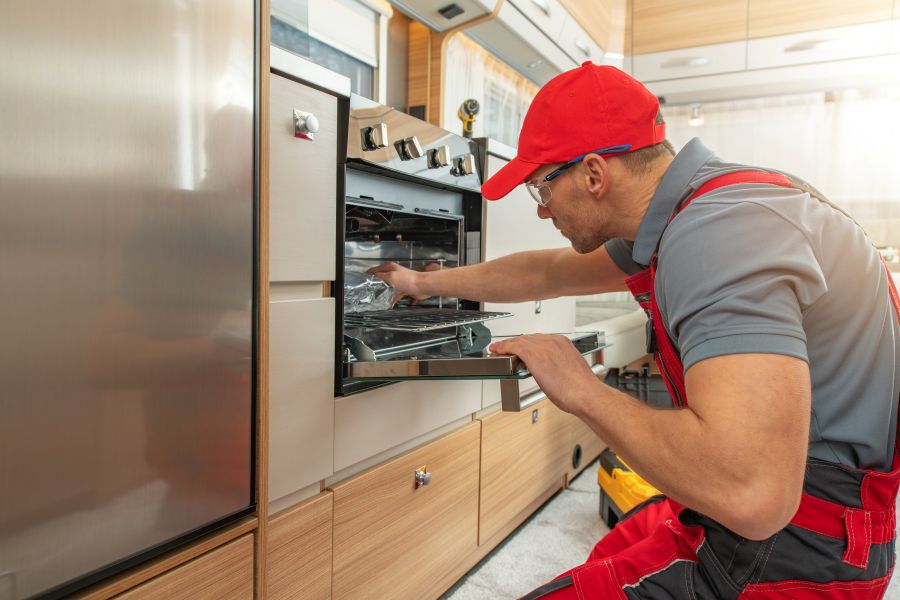
Once the valve is open and there are no obvious signs of a leak, test each gas-fired appliance. Start with the stove top burners to purge air out of the lines. It may take a few attempts for the first burner to light as the propane pushes air out, then the remaining burners should ignite more quickly. After confirming proper flame and control, move on to the oven, furnace, and refrigerator set to gas mode. Each appliance should ignite promptly, remain lit, and operate smoothly without repeated cycling or flame-out. For the furnace, allow it to run long enough to confirm that it lights, blows warm air, and cycles off and back on properly according to the thermostat setting.
Test the water heater on LP gas mode as well. After verifying that the tank is full of water, switch it to gas operation and watch for the ignition sequence. You should hear the burner light and see a steady flame through the inspection port if equipped.
To perform a basic do-it-yourself leak check, mix a small amount of dish soap with water in a spray bottle or use a commercial leak detection solution. Apply the solution generously to propane connections, fittings, and the regulator. Any leak will cause the solution to form growing bubbles. If you see bubbling, shut off the propane immediately and do not operate the system until the leak is repaired.
Even if everything appears normal, it is wise to schedule a professional LP system inspection at the beginning of the season. Many RV service centers and dealers can test the entire propane system for leaks and verify operating pressure using specialized equipment. This extra step offers peace of mind for you and your passengers.
While you are at the cylinders, check the manufacture or recertification date stamped on each portable propane tank. Most tanks require recertification or replacement after about 10 to 12 years, which becomes important when you go to have them refilled. If the tank is out of date, plan on replacing or recertifying it before your first big trip.
Safety Devices
Safety devices are easy to overlook until they are needed most, so don’t forget them during de-winterization. Begin by reinstalling any dry-cell batteries or fuses you removed for storage. This includes batteries in wireless door locks, keypads, remote controls, and especially in smoke alarms and detectors.
Once power is restored, press the test button on every smoke alarm, CO detector, and propane detector. You should hear a loud, clear alarm. If a detector does not sound, replace the batteries and retest. Replace any unit that still fails. These devices protect you from hidden dangers and should always work properly.
Check the labels or date codes on them as well to confirm they are still within their service life. A seasonal maintenance routine should include replacing expired units because the sensing elements degrade over time.
Next, inspect your fire extinguisher. Verify that it is located where you can reach it quickly and that its mounting bracket is secure. Check the pressure gauge to ensure the needle sits firmly in the green zone. If you have a dry powder extinguisher, give it a firm shake and tap to loosen the powder inside, which can compact while the RV sits in storage. Replace any extinguishers that are damaged, undercharged, or past their recommended service life.
Finally, open your first aid kit and roadside emergency supplies. Confirm that you still have basic bandages, antiseptics, pain relievers, and any personal medications you keep on board, and check expiration dates. Inspect roadside flares or reflectors, spare batteries, and flashlights. Restock anything that is missing or expired so you are prepared for minor medical needs or roadside problems during the travel season.
Filters, Vents, and Windows
With major systems and safety devices addressed, move on to the components that affect day-to-day comfort and air quality. If your RV has them, replace all water filter cartridges, including in-line filters, external canister filters, and refrigerator water filters. The fresh cartridges ensure that stale water or trapped debris won’t affect taste or flow.
Check the air conditioning and furnace filtration. Clean washable AC filter pads according to the manufacturer’s instructions. Replace the furnace filter if it is a disposable type, or clean it if it is reusable. Clean filters allow your HVAC systems to operate efficiently and help keep dust and allergens under control inside the RV.
Walk through the interior and operate every window, vent, and powered fan. Open and close each one fully to make sure that latches, cranks, and seals are working correctly. Look along the edges for cracked gaskets, damaged screens, or signs of past leakage. Lubricate moving parts as needed with an appropriate product so they continue to operate smoothly throughout the season.
Extend and retract your awning and any slide-out toppers to verify that the fabric, arms, and hardware are in good condition. They should move smoothly without binding or unusual noises. Check for tears, sagging fabric, or loose attachment points that could worsen once you are on the road. Addressing these issues in your driveway is much easier than dealing with a torn awning or sticking vent during a trip.

Wrap-Up and Travel Planning
Documentation and Registration
Round out your de-winterizing process by confirming that all your paperwork is current and easy to find. Double-check that your RV registration, inspection stickers, and insurance cards are up to date and match the vehicle you will be driving or towing. Store these documents in a dedicated folder or glove box compartment inside the RV so they are instantly accessible if you are pulled over or need them at a campground office. Keeping everything organized now prevents last-minute scrambles on departure day.
Shakedown Trip
At this point, you have inspected the exterior and chassis, restored power and water systems, verified appliances and safety gear, and given your RV a good spring cleaning. Your RV is now fully de-winterized, sanitized, and tested. It is ready for spring and summer adventures, whether that means weekend getaways, cross-country travel, or extended stays at your favorite campground.
Before committing to a long trip, plan a short local outing as a shakedown trip. Choose a nearby campground or an overnight destination that allows you to use every major system without being far from home. Treat this as a live test of your work.
During the shakedown, monitor how well the refrigerator holds temperature, both on electric and gas. Confirm that the water heater produces consistent hot water and recovers in a reasonable amount of time. Pay close attention to how your brakes feel, steering response, and ride quality.. Make note of any odd noises, leaks, or issues so you can correct them before your longer RV trips.
Hit the Road With Confidence
De-winterizing your RV carefully will protect its systems, safeguard your passengers, and prepare you for a season of confident travel. Each inspection, flush, test, and tune-up reduces the chance of unexpected and costly repairs once you are on the road. If your shakedown trip reveals that your current rig no longer fits your camping style, you can browse RVs for sale and compare floorplans, features, and price ranges. You can roll into the new season focused on the fun parts of travel rather than worrying about what might go wrong with a well-prepared RV.