
Meet Our Guest Contributor: Dana Shik, PhD.
Dana is the creator of Four Sprouts, where she shares family RV travel guides, road-tested travel tips, and plant-based recipes inspired by life on the road. Together with her husband and four children, she spends several weeks each year exploring the United States and Canada by RV, documenting the practical realities of extended family travel, campground life, meal planning, and outdoor adventures.
Professionally, Dana is a senior medical writer with a PhD in Immunology and is currently completing Cornell University’s Certificate in Nutrition and Healthy Living. Her background in science and nutrition influences the way she approaches family travel and meal planning, with a focus on creating realistic systems that help families eat well while away from home.
Through Four Sprouts, Dana aims to help families travel more often, cook more confidently on the road, and make the most of their time outdoors.
Website | RV Travel | Recipes | Instagram | Facebook | TikTok

When you’re traveling with four kids, no matter if it’s a short weekend getaway or extended travel, meal planning becomes part of the trip logistics, because for most people, food anchors a trip. Many RV travelers are happy to rely on restaurants, takeout, convenience foods, or campground staples, and while simplicity is sometimes a blessing, I wanted to maintain certain nutrition standards when I cook, even when we are road tripping.
We absolutely love traveling together, but it can get physically demanding, and we learned firsthand how certain components in the trip can make or break the experience. Long driving days, hiking, and spending entire days outdoors require meals that are satisfying and nourishing, travel and reheat well, and are made with ingredients that have a long shelf-life.
Cooking vegan for a family with four picky eaters adds another layer of challenge, and because of all these reasons, I had to come up with a system that simplifies packing for travel and cooking on the road, so along with campground reservations, route planning, and activity research, I spent time planning our pantry and thinking about how we’re going to prepare meals in a tiny kitchen (with no dish washer).
To make that practical, I stopped planning meals and started planning categories instead:
- Legumes
- Grains & Starches
- Healthy Fats
- Produce
- Refrigerated
- Fast Meal Solutions
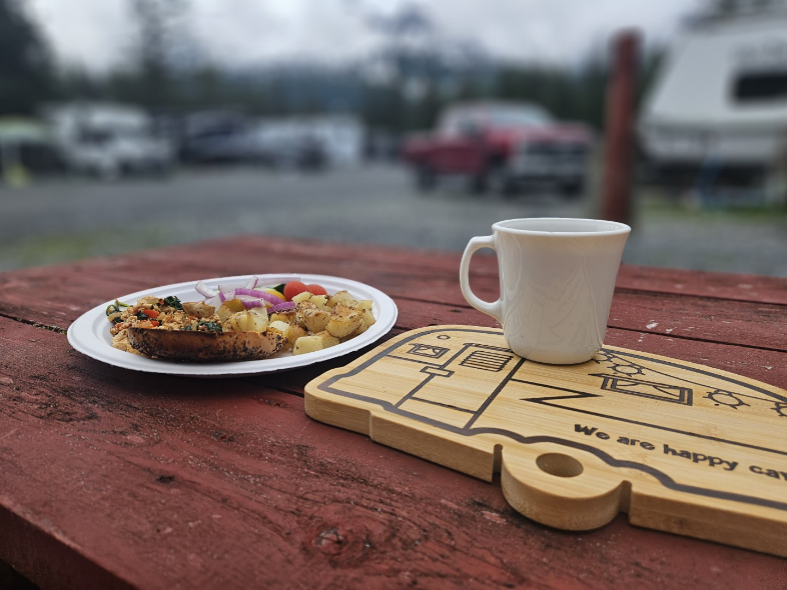
The general idea is that you plan on a certain number of options in each category, and then pick 1 option from each category to build each meal. Mix and match.
For example, a simple dinner might combine ingredients of 4 of the categories – rice from the grains category, black beans from the legumes category, avocado from the healthy fats category, and cabbage and onions from the produce category. Another night, the same framework might lead to a pasta dish with lentils, roasted vegetables, olive oil, and a side salad. The specific recipes change constantly, but the categories remain the same.
What I like about this approach is that it removes much of the pressure to plan every meal in advance. Instead of building a detailed menu for weeks of travel, I focus on keeping enough options available within each category. If an ingredient runs out, a grocery store doesn’t carry a specific product, or our plans change, I can usually substitute something else from the same category and still put together a balanced meal without much effort.
This has become especially valuable during longer trips or remote places, when flexibility matters. With that framework in mind, here are the categories that form the backbone of our RV pantry and refrigerator when we travel.
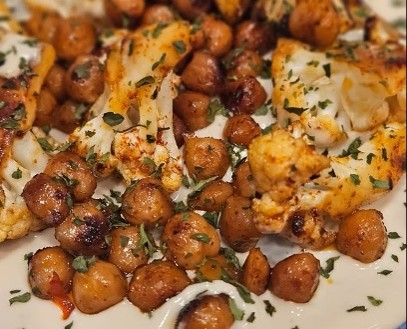
Category 1 – Legumes
What counts as legumes? Beans, lentils, split peas, and chickpeas, which appear in our meals almost daily.
Why eat more legumes? Legumes provide plant protein, fiber, iron, folate, and other nutrients that are valuable in any diet, and they work in a wide range of meals.
Why pack legumes? Legumes travel exceptionally well. We keep canned beans in the RV, but I also pack dry lentils because they cook relatively quickly and are great for many recipes. Legumes are great for one-pot recipes, which is something I’ve been focusing on creating, for the sake of quick recipes and for as few dishes as possible.
Category 2 – Grains & Starches
What counts as grains? Rice, oats, bulgur, potatoes, pasta, bread, and others. Grains form the foundation of many meals we make, especially on the road.
Why eat more grains? These foods provide complex carbs, fiber and micronutrients.
Why pack grains? Grains are easy to store at room temperature and are, for the most part, affordable, making them especially compatible for any form of road tripping – for example, a bag of rice can support several dinners, and potatoes can be made fried, baked, mashed or roasted.
Category 3 – Healthy Fats
What counts as healthy fats? Raw or roasted nuts & seeds, nut butters, raw tahini, olive oil and avocados, that are staples in both our home and our RV kitchen.
Why eat more healthy fats? They are naturally packed with unsaturated fats (the good kind of fat!), loads of fiber, plant protein, and also micronutrients such as vitamin E and magnesium.
Why pack healthy fat foods? These foods are easy to store at room temperature. We make sandwiches with nut butters, use tahini for salad dressing or as a binder in a sandwich, and make trail mixes and smoothies with raw nuts for travel days. Olive oil is one of the healthier oil choices, and I add it to pancake batter, salads, rice, baked pans of vegetables or roasted tofu, and anything in between. It really is our go-to oil.
Category 4 – Produce
Produce requires more planning than any other category.
What produce do we usually pack? Before every trip, I factor in how long we’ll be traveling, which directly affects how I pack, because different fruits and vegetables have very different shelf life. Some require refrigeration, and some can stay in room temperature for weeks. Leafy greens, berries, avocados and softer fruits usually need to tak e up room in the fridge, and we make sure to eat them during the first few days after a grocery run. Apples, oranges, grapefruits, cabbage, onions, carrots, and sweet potatoes stay fresh much longer and help bridge the gap until our next grocery stop.
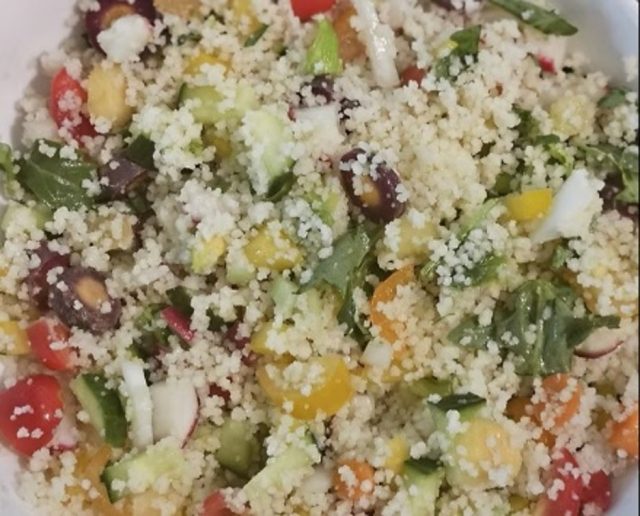
Why eat more vegetables and fruits? For many of us, it might go without saying, but these vary in their nutritional composition, but all in all, they are packed in micronutrients and fiber, and support our gut health.
I also try to include vegetables in as many meals as possible, because travel can easily become heavy on convenience foods, because, well, it’s convenient! I’ve been trying to come up with as many one-pot meals as possible during travel, so that the quality of the meals won’t compromise the flavors. We often use rice or bulgur as the basis, we top it with beans, leafy greens (cabbage or kale work really well in this context), onions (either red or yellow – both yield a perfect result) and mini carrots. Other times, we lay root vegetables on a pan, such as cabbage, onions, cauliflower, and broccoli, season everything evenly and roast it for half an hour, for an effortless, tasty, and nourishing addition to our dinners. If we add chickpeas and/or tofu chunks to that pan, we have a full meal put-together in a matter of minutes. We focus on vegetables with longer shelf-life, and keep them in our recipes one way or another.
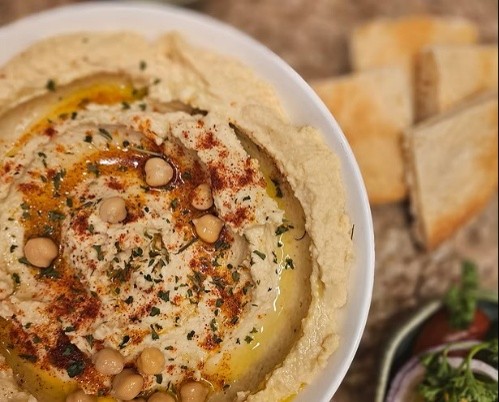
Category 5 – Refrigerated
What earns RV fridge space on our travels? Plant milks (for coffee, cereal or simple bakes), tofu, plant-based cream cheese, fresh fruits and vegetables (and frozen ones), vegan yogurt, and condiments are some of the refrigerated foods we make room for on most of our RV travels.
Why pack refrigerated foods? These add freshness and variety, and some have an extended shelf life. Because RV refrigerator space is limited, we prioritize versatile items that can be used in multiple meals. This is a highly diversified category, so there’s no unified nutritional value to all, but of the examples I listed, tofu in particular is our first priority in this category, as it offers complete protein and is extremely versatile (used for stir-fries, one pots, grain bowls, and breakfast scrambles, and I even use silken tofu in a quick and easy mac n cheese, and smoothies). Plant milks we love are rich in protein too and are fortified in vitamins and calcium. Overall, if you’ve got the space, you’ll likely want to stock up with your favorite basics, and leave room for cooked leftovers.
Refrigerated foods typically require more planning and more frequent grocery stops than pantry staples, but we find that keeping a selection of fresh ingredients on hand makes it much easier to prepare balanced meals while traveling.
Category 6 – Fast Meal Solutions
What counts as fast meal solutions? Frozen vegetables, soy nuggets or burgers, jarred sauces, and simple pantry staples make it possible to prepare a balanced meal very quickly and almost effortlessly.
Why pack fast meal solutions? When people hear that we travel for long periods, we often hear a couple of repeated questions – one is how do we manage work, kids (without the usual academic structure) and enjoy the travel experience, but another question is how do we cook on the road. While I’m always striving to maintain a healthy diet, the reality of RV travel is that some days are long. Sometimes we return to the campground late, or we’re tired after hiking. And sometimes, there just zero energy to spend time in the kitchen (it doesn’t happen only on travel days!). For those situations, I always keep foods on hand that help the meal come together quickly.
How about from a nutrition standpoint? There is a great selection of plant-based fast meals we love, that relatively have a ‘clean label’, which means essentially, that they are made with harmless ingredients, even if sometimes the product is processed. We try to pick those that don’t carry enigmatic chemical names or preservatives.
But at the end of the day, the key is balance, and we don’t overthink it when we do end up with a heavily-processed meal. It happens, and it’s okay.
The recipes we cook change from one adventure to the next, but the framework remains remarkably consistent. We stock the RV with what we consider kitchen staples of each of those categories, and we sketch a rough food plan, mainly to have a peace of mind beforehand, and struggle as little as possible on that front (At least!).

This system has been serving us well through years of RV travel. It keeps our pantry organized, simplifies grocery shopping, supports balanced meals, and allows us to spend more time focusing on the places we’re visiting.
If you’re looking for meal ideas that work particularly well in an RV kitchen (travels well or easy to cook), you can browse our collection of travel-friendly vegan recipes here.
If you’re still budgeting for future trips, read our post about RV Trip Cost Estimator with a budgeting calculator we created to help you estimate fuel, campground, and travel expenses. For travel ideas & itineraries, and plant-based cooking, visit FourSprouts.