RVing with dogs can make every trip feel more memorable. Your dog gets to come along for the adventure and stay close to the people they love instead of being left behind. For many RVers, that is one of the biggest reasons they choose RV travel in the first place.
Still, RVing with pets takes some extra preparation. Dogs need safe places to ride, regular bathroom breaks, enough exercise, and a comfortable space to relax once you arrive at your destination. You also have to consider campground pet rules, weather, vaccination records, and what your dog may need if plans change along the way.
The good news is that a little planning can make rving with dogs so much easier. You’ll have a safer and more enjoyable trip if you plan it with your dog’s needs in mind.
1. Choose Dog-Friendly RV Destinations
Before you hit the road, spend time choosing RV destinations that will work well for both you and your dog. Not every RV park, campground, trail, beach, or attraction has the same pet rules, so double-check before you book.
Look for dog-friendly RV parks and campgrounds with walking areas, shade, pet stations, nearby trails, or even fenced dog parks. Some campgrounds have pet fees, leash requirements, breed restrictions, or limits on the number of dogs allowed per site.
It is also helpful to plan stops where your dog can stretch, sniff, and burn off energy during the drive. Dog-friendly restaurants, parks, beaches, and hiking trails can make travel days more fun and less stressful. Tools like BringFido can help you find pet-friendly places to stay, eat, and explore along your route.
If you need ideas for where to stay, RVUSA’s guide to dog-friendly RV parks is a helpful place to start. You can also browse RV campground options and look for destinations that offer plenty of space and amenities for rving with your dog.
2. Plan Your Route Around Your Dog’s Needs
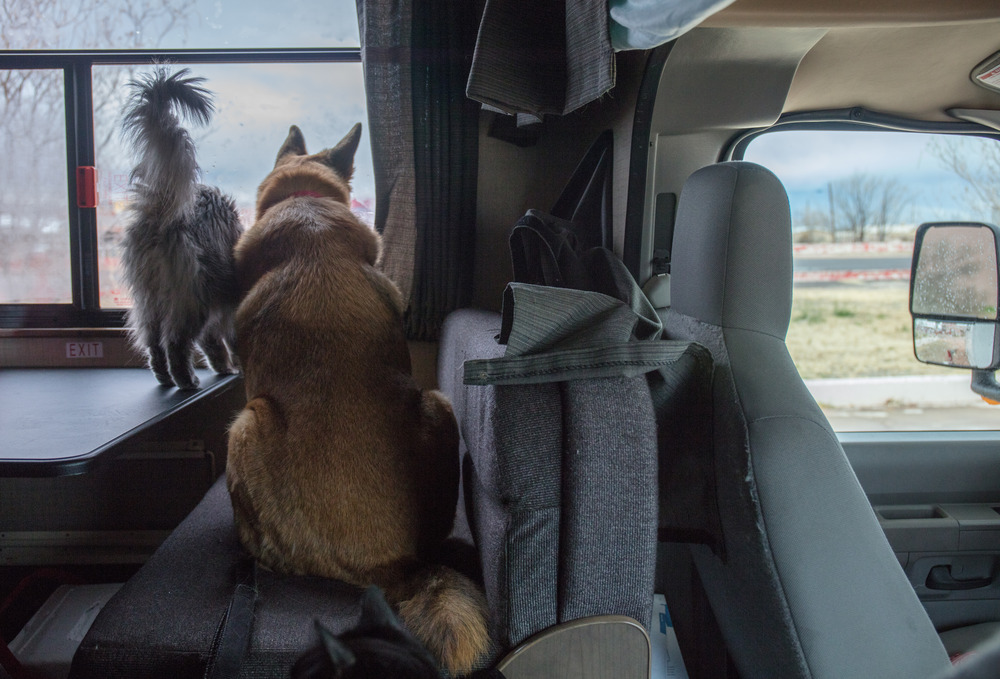
A good RV route should include time for bathroom breaks, walks, meals, water, and rest. When you’re rving with a dog, shorter travel days can help keep your dog comfortable, especially if they’re older, anxious, or new to RV travel.
Plan stops every few hours so your dog can get outstretch and reset before getting back on the road. Rest areas, parks, and pet-friendly travel stops can make the entire trip easier.
Check the weather along your route and at your destinations before you leave.It is important to build in flexibility when you can in order to keep your dog safe from harsh weather like extreme heat, cold, storms, and hot pavement.
RV-friendly navigation tools can also help you avoid routes that may be stressful or unsafe for your rig. RV GPS apps can help with low clearances, road restrictions, and campground access, while road trip planning resources can help you choose routes with better stops along the way. The best tips for rving with dogs usually come down to one thing: give yourself enough flexibility to meet your dog’s needs.
3. Pack the Right Gear for RVing With a Dog
Packing the right supplies makes RVing with a dog easier by keeping them comfortable, safe, and well cared for throughout the trip.
Food, Water, and Everyday Essentials
Start with the basics your dog uses every day. Pack food, fresh water, collapsible bowls, treats, a leash, harness, waste bags, and your dog’s regular bed or blanket. Familiar items can help your dog feel more comfortable in the RV, especially during the first few days of the trip.
Extra Food, Medication, and Cleaning Supplies
Bring enough food and medication for the full trip, plus a little extra in case your plans change. If your dog eats a specific brand or prescription diet, do not assume you will be able to find it easily on the road. It is also smart to pack flea and tick prevention, grooming wipes, towels, and cleaning supplies for muddy paws, shedding, or accidents.
Pet First-Aid and Health Information
A pet first-aid kit is another smart thing to pack. Include bandages, tweezers, antiseptic wipes, any medications your vet recommends, and copies of important health information.
Comfort Items for the RV
For comfort inside the RV, consider non-slip mats, washable seat covers, a crate or travel bed, favorite toys, and a secure place for food and water. The more prepared you are before the trip, the easier it is to relax and enjoy the road with your dog.
4. Keep Your Dog Safe While Driving
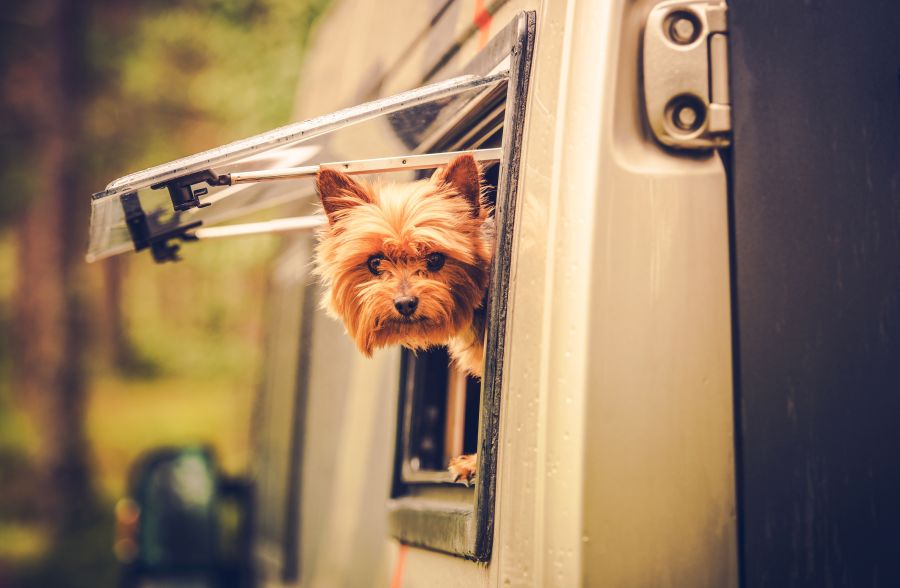
Safety should be a top priority when rving with your dog. Letting your dog roam freely inside the RV can be dangerous during sudden stops, sharp turns, or rough road conditions. A loose dog can get hurt, distract the driver, or get in the way of important controls.
Create a Safe Travel Spot
The safest option is to secure your dog while the RV is moving. Use a properly fitted travel crate, pet carrier, or crash-tested harness based on your dog’s size and comfort level. Keep your dog away from the driver’s seat and dashboard, and give them a dedicated space where they can sit, lie down, and feel safe.
Before a long trip, take a few short practice drives in the RV. This can help your dog get used to the RV’s movement, sounds, and space before you spend more time on the road.
5.Bring Vaccination Records, ID, and Vet Information
Before you leave home, gather your dog’s important health and identification documents. Many campgrounds, RV parks, boarding facilities, and dog daycares may ask for proof of vaccinations, especially rabies. Having those records ready can save you time and help you avoid problems during your trip.
Keep both printed and digital copies of your dog’s vaccination records, medication list, and your regular veterinarian’s contact information. You should also write down any medical conditions, allergies, prescription details, and feeding instructions in case someone else needs to care for your dog in an emergency.
If your trip crosses state lines or takes you outside the country, check pet travel requirements before you go. Rules can vary depending on where you’re traveling, how long you will be gone, and whether you are crossing a border. Resources like the AVMA pet travel guidance, USDA APHIS pet travel page, and CDC dog import requirements can help you understand what paperwork may be needed.
It is also smart to look up emergency veterinarians near your destination before you arrive. Save the contact information for a few nearby clinics so you have it ready if you need it.
6. Microchip Your Dog Before the Trip
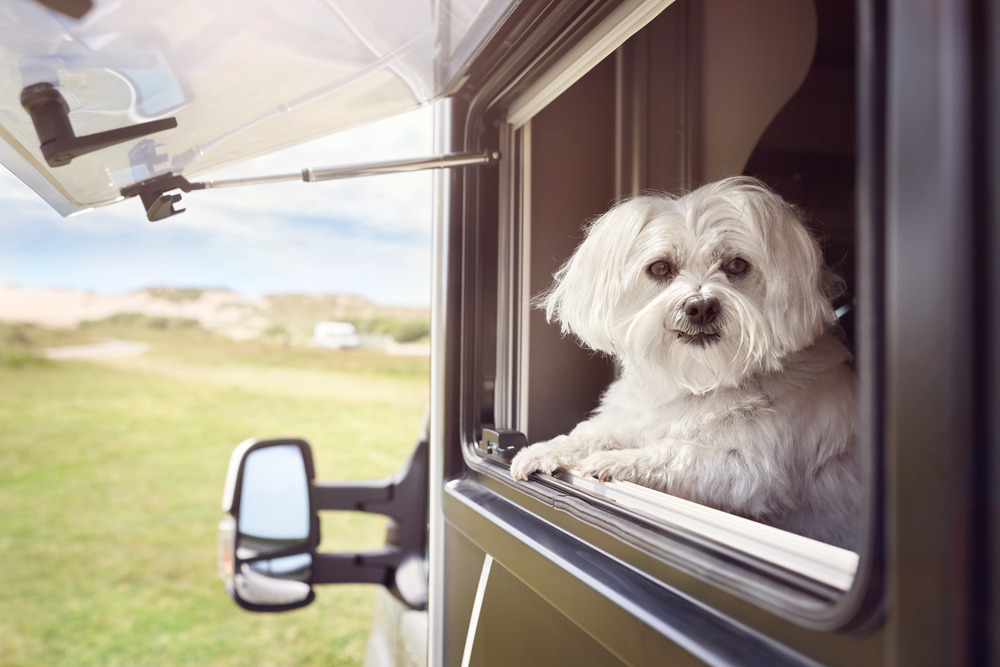
A collar and ID tag are important, but they can fall off or become hard to read. That is why microchipping your dog before an RV trip is a smart safety step. A microchip gives your dog a permanent form of identification that can help reunite you if they ever get lost.
If your dog is already microchipped, check that the registration is active and your contact information is up to date. Make sure your phone number, email address, and emergency contact are correct before you leave. Your dog should still wear a collar with an ID tag that includes your phone number and, if possible, a backup contact.
It is also helpful to keep a recent photo of your dog on your phone. If your dog gets loose at a campground, rest stop, or trail, a clear photo can make it easier to ask for help and share accurate information quickly.
7. Make Your RV Pet-Friendly
A pet-friendly RV can make the whole trip more comfortable for your dog. Before you leave, create a safe, familiar space where your dog can sleep, eat, rest, and relax.
Create a dedicated dog space
Choose one spot in the RV for your dog’s bed, blanket, or crate. A familiar area can help your dog settle in faster, especially on their first RV trip.
Secure anything unsafe
Keep food, trash, cords, cleaning supplies, medications, and small items out of reach. If your dog is curious or anxious, use pet gates to block off areas they should not access.
Make cleanup easy
Use washable seat covers, non-slip mats, and easy-to-clean bedding. Keep towels, grooming wipes, and a small vacuum nearby for muddy paws, shedding, and campground dirt.
Keep your dog comfortable.
Make sure your dog has fresh water, shade, ventilation, and a place to rest away from direct sunlight.
Watch the temperature.
RVs can heat up or cool down quickly. A temperature monitor can give you extra peace of mind if you need to step away for a short time while rving with pets.
8. Follow Campground Etiquette With Dogs
Good campground etiquette helps keep RV parks welcoming for dog owners. Always follow leash rules, keep your dog under control, and do not let them wander into other campsites or approach people and pets without permission.
Be mindful of barking, especially early in the morning or late at night. Bring plenty of waste bags, clean up after your dog, and use campground pet stations when available.
Avoid leaving your dog unattended outside your RV. Even a well-behaved dog can become anxious, tangled, overheated, or reactive in a new environment.
9. Use Pet-Friendly Apps and RV Travel Tools
The right apps and travel tools can make rving with your dog much easier. Before your trip, download a few resources that can help you find pet-friendly stops, plan safe routes, check weather, and locate services along the way.
Pet-focused tools like BringFido can help you find dog-friendly campgrounds, restaurants, parks, beaches, hotels, and activities. This can be especially helpful when you are visiting a new area and want to make sure your dog can come along.
RV apps can also help with trip planning, campground reviews, fuel stops, weather updates, and maintenance reminders. RV GPS apps are useful for choosing RV-safe routes and avoiding low clearances, restricted roads, or tricky turns that could make travel more stressful.
10. Know When to Leave Your Dog in the RV
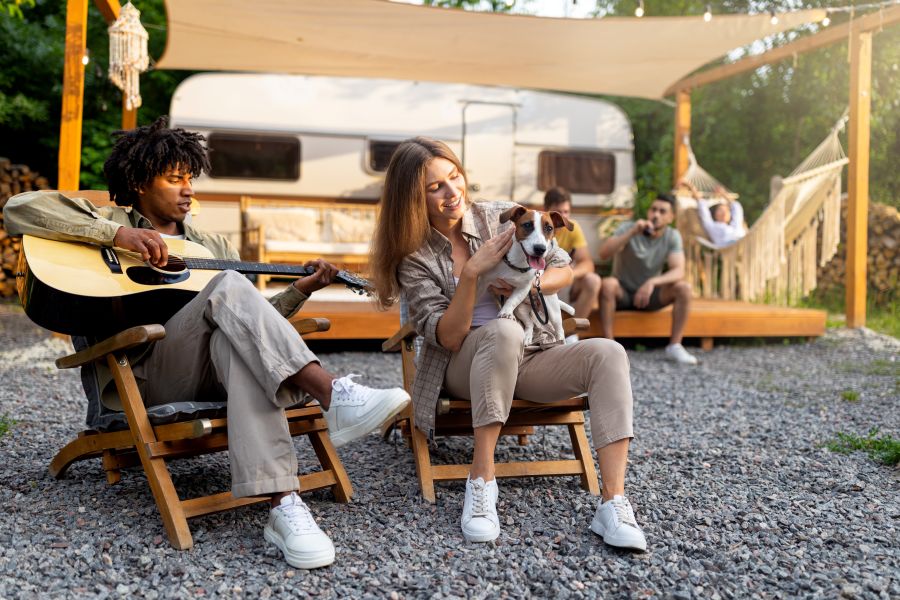
There may be times when you need to leave your dog in the RV for a short period, but it should always be done carefully. RVs can heat up or cool down quickly, especially if the air conditioning, heat, or power fails.
Before leaving your dog alone, make sure the RV is secure, the temperature is safe, and your dog has fresh water and a comfortable place to rest. Close blinds or shades to reduce direct sunlight, and keep anything they could chew or knock over out of reach.
A temperature monitor can be helpful when rving with pets, but it should not replace regular check-ins or a backup plan. Avoid leaving your dog alone for long periods, especially during extreme weather, storms, or power outages. If your dog cannot join an activity, consider a trusted pet sitter, dog daycare, or local boarding option.
Enjoy the Road With Your Dog
Browse RVs on RVUSA to find the perfect setup for your next pet-friendly adventure. RVing with your dog is easier when you have the right setup for the trip, including enough space for your dog to rest, eat, and ride comfortably. Look for easy-to-clean surfaces and smart storage for pet gear so every mile feels more comfortable, whether you are rving with a dog or rving with multiple dogs.