Skipping “small” winter tasks with your RV can turn into big, expensive repairs when spring rolls around. Cracked seals, dead batteries, and hidden moisture damage often start with details that seemed easy to ignore. These RV winterizing tips focus on those often-forgotten steps so you can protect your RV now instead of paying for surprises later.
1. Clean the Exterior of your RV
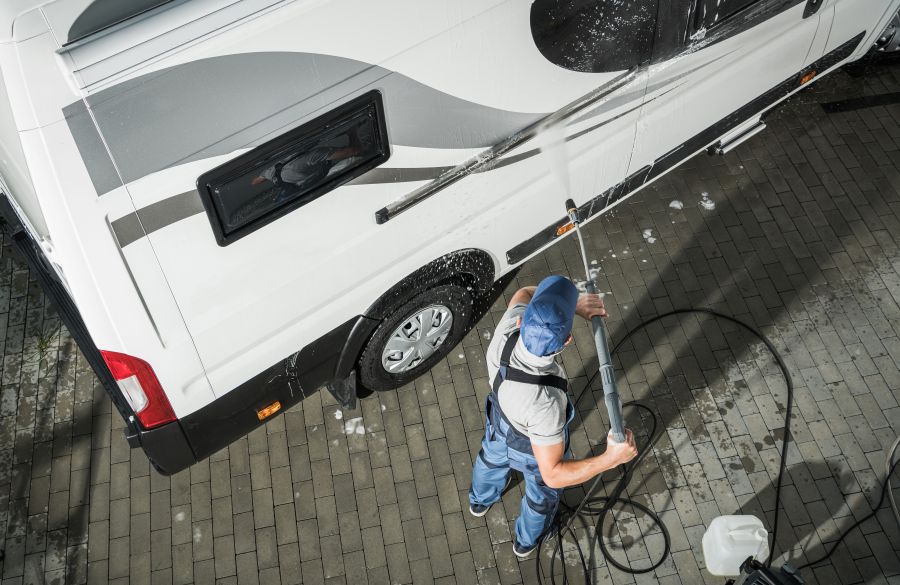
Before you get into the more technical parts of your RV winterizing checklist, take the time to give the exterior of your RV a thorough wash and dry. This is not just about having a shiny RV for storage. Cleaning the outside removes the film of dirt, bugs, and road grime that can hide early signs of damage. As you work your way around with a soft brush and mild soap, you’ll have a close-up view of areas you might normally overlook. That is when you’ll spot small details like light rust forming around trim, hairline cracks in fiberglass or siding, or small tears that could easily spread once freezing temperatures arrive.
Once the RV is clean and dry, do a slow walk-around and a roof check with inspection in mind. Look closely at the seals around windows, doors, roof vents, antennas, and any place where something passes through the exterior. Dried or crumbling caulk, gaps, or soft spots in the roof coating are all signs that water might already be trying to find a way in. If you catch those issues now and reseal them before winter sets in, it’ll reduce the chances of leaks, saturated insulation, and hidden rot showing up next season. A clean exterior is the first step in any effective RV winterizing routine. One of the most important RV winterizing tips is to wash your RV thoroughly before you begin because it helps you spot any maintenance needs before cold weather puts your rig to the test.
2. Add Fuel Stabilizer
When your RV is going to sit for weeks or months, untreated fuel can start to break down, thicken, and create buildup inside the fuel system. That breakdown can lead to clogged lines, rough starting, and poor performance when you fire up the engine again in spring. A fuel stabilizer slows that chemical process, keeping the gasoline fresh and protecting the components that depend on it. For gas-powered RVs, this simple step prevents many of the issues that show up after long periods of storage.
Steps to Protect Your Fuel System During Storage
Before you park the RV for the season, take a few minutes to prep the fuel system so it’s ready to start smoothly when you need it again.
Top Off and Treat the Tank
Fill your RV’s fuel tank most of the way and add the recommended amount of fuel stabilizer according to the product instructions. A fuller tank leaves less room for condensation to form, and the stabilizer slows the natural breakdown of gasoline so it stays usable during long-term storage.
Circulate the Treated Fuel
Start the engine and let it run for several minutes, then do the same with the generator. This allows the treated fuel to move through the fuel lines, injectors or carburetor, and other components. .It ensures that every part of the system is protected instead of leaving pockets of old, untreated fuel behind.
3. Prepare Your Tires for Long Periods of Sitting
Tires quietly take a beating during storage, even when your RV is not moving. Before you park it for the season, check the tire pressure and inflate each tire to the manufacturer’s recommended pressure. Underinflated tires sitting in one position for months can also create flat spots and sidewall damage, leading to vibrations or even failure once you are back on the road. If you can access the RV during winter, plan to check the pressure a few times and top it off as needed. Cold temperatures naturally lower tire pressure, so a quick check every month or so can keep your RV rolling smoothly when spring comes around. Including tire checks on your rv winterizing checklist is also an easy way to protect one of the most important safety components on your rig.
Keep Your Tires Safe and Ready to Roll
Once pressure is set, focus on protecting the tires from the elements and from uneven stress during storage. Tire covers are a simple but powerful tool. They shield the rubber from UV rays and harsh weather, which can dry out the sidewalls and speed up tire cracking. Slip them on after your final pressure check so the tires are clean, dry, and ready for the months ahead.
Next, make sure the RV is parked on stable, level ground and use quality wheel chocks to hold it securely in place. If the site is slightly uneven, adjust your leveling blocks or jacks so weight is distributed as evenly as possible instead of loading one tire or side more than the others. Reducing long-term strain on any single tire helps prevent distortion, flat spots, and premature wear. A little attention now keeps your tires lasting longer.
4. Prep Your Batteries to Prevent Spring Surprises
Cold temperatures are tough on batteries, especially when they sit unused for long periods. As the temperature drops, the chemical reaction inside the battery slows down, which reduces its available power. At the same time, small parasitic draws from onboard electronics can slowly drain the charge until the battery is low or even ruined. That is why so many RV owners discover dead or damaged batteries when they try to start their engines in spring. Building battery care into your rv winterizing tips keeps your electrical system healthy and saves you from having to buy new batteries before your next trip.
Don’t Let Your Batteries Die in the Cold
A few simple habits before and during storage can make the difference between reliable power and a dead battery bank in spring.
Disconnect House and Chassis Batteries
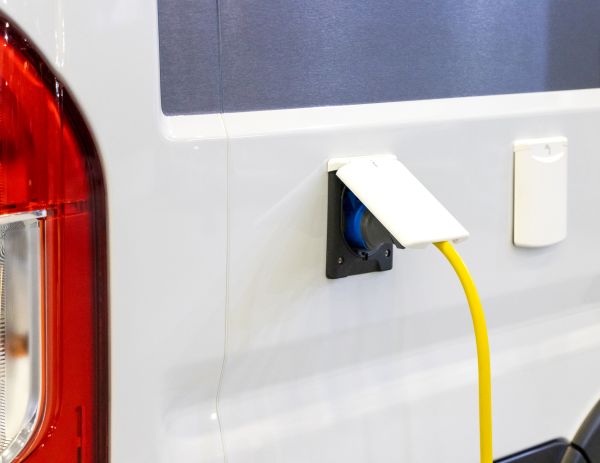
If you are storing the RV and not using it regularly, disconnect the batteries once they are fully charged. This helps protect them from phantom draws coming from clocks, detectors, and other small electronics that quietly pull power even when everything seems “off.”
Use a Trickle or Maintenance Charger
For longer storage, consider putting your RV batteries on a quality trickle charger or maintenance charger. These devices keep the charge level topped off without overcharging, which is especially helpful in cold weather when self-discharge and parasitic loads can quickly drain a sitting battery.
Check Water Levels in Flooded Batteries
If your RV uses flooded lead-acid batteries, check the water levels before storage and top them off with distilled water if needed. Proper fluid levels help the battery handle charging and discharging more effectively, which reduces the risk of damage during winter and supports a longer overall lifespan.
5. Make Your RV Critter-Proof
As temperatures drop, rodents like mice start looking for warm and sheltered places to hide, and an RV sitting in storage is the perfect target. Once inside, they can chew wiring, tear insulation, ruin bedding, and create nests in hidden corners. Even a tiny opening is enough for a mouse to squeeze through, which makes critter-proofing an essential part of winter preparation. A little prevention keeps your RV clean, protected, and ready for spring without any surprises waiting inside.
Keep Mice and Other Pests Out All Winter
Before you close up the RV for the season, spend time looking for the small gaps and openings that allow rodents to sneak in. Plug these entry points with non-rusting materials such as copper mesh or steel-wool alternatives, which block access without deteriorating over time. Look closely around plumbing lines, wiring paths, slide-out corners, and any gaps you can see underneath the RV. These tucked-away spots are the most common places where mice find their way inside.
Remove anything that might attract them once temperatures drop. Store all food, spices, pet treats, and scented products in sealed containers, or remove them entirely if the RV will be unused. Even crumbs or leftover packaging can draw pests in. With these simple steps added to your RV winterizing checklist, you make the RV far less appealing to any critters searching for a winter home.
6. Cover the RV and Place Moisture Control
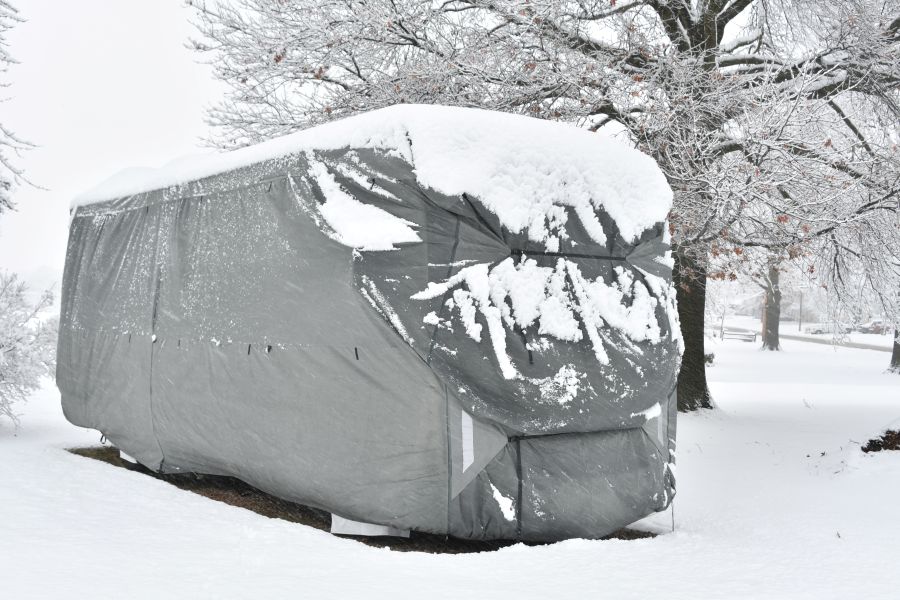
A good RV cover is more than a giant tarp tossed over your rig. A quality cover is made to fit your RV’s size and shape, with built-in ventilation so moisture does not get trapped underneath. That proper fit helps prevent wind from whipping the fabric against your paint and trim, and it keeps the cover from flapping or tearing in bad weather. Investing in an RV cover protects the exterior you just cleaned and inspected. It also helps preserve the roof, decals, and seals that can otherwise degrade faster when they are exposed all winter.
Protect the Exterior and Fight Hidden Moisture
Once your RV is parked and prepped, putting on a well-fitted cover shields it from UV rays, snow, ice, and falling debris. Sun can fade paint and dry out rubber components even during cold months, while snow and ice add weight and moisture to the roof. A breathable RV cover acts like a protective shell, reducing direct exposure to the elements so your rig looks better and lasts longer.
Moisture control inside the RV is just as important as protecting the outside. Products like DampRid or other desiccant options can help pull excess moisture out of the air while your RV is closed up. Place containers in key areas such as storage bays, the bathroom, kitchen, and bedroom so they can quietly work while the RV sits. If you plan to check on the RV during winter, make it a habit to look at those moisture absorbers and replace or empty them as needed. Keeping both the exterior and interior guarded against moisture gives you a fresher, cleaner RV when you open the door again in spring.
Build Your Personalized RV Winterizing Checklist
Creating your own RV winterizing checklist makes each travel season easier and more enjoyable. Once you write down the tasks that apply to your rig, you can follow the same steps every year instead of trying to remember. Group your tasks into simple sections such as exterior care, mechanical prep, tire checks, battery maintenance, critter prevention, and moisture control. This helps you move through RV winterization in a clear order without missing the smaller details that often lead to problems later. A personalized checklist also lets you adjust over time as you learn what works best for your RV and your storage conditions.
Put These RV Winterizing Tips Into Action Before The Freeze
Using RV winterizing tips that focus on the often-overlooked details helps protect your RV from freezing temperatures, moisture, pests, and long periods of sitting still. With a clear approach and a personalized checklist, you set yourself up for a smoother spring and fewer repairs. If you do not want to winterize your RV yourself, find a RV service location that offers professional winterization so you can still protect your rig without taking on the work alone. These simple choices go a long way in keeping your RV clean, safe, and ready for the spring adventures.