Your RV is a big investment, so it is worth finding a safe place to keep it when you are not traveling. Weather, moisture, pests, theft, and even sitting unused for too long can lead to damage and expensive repairs. With the right storage plan, you can protect your RV and spend less time getting it ready for your next trip.
The best RV storage solution depends on the size and value of the RV, local weather, budget, preferred access, and available space.
Why RV Storage Matters
It is worth finding a safe place to keep your RV when you are not traveling. Weather, moisture, pests, theft, and even sitting unused for too long can lead to damage and expensive RV repairs. With the right storage plan, you can protect your RV and spend less time getting it ready for your next trip. Proper storage protects more than the RV’s appearance. It can help prevent roof and seal damage, faded finishes, cracked tires, plumbing failures, dead batteries, fuel problems, moisture buildup, and pest activity. It also reduces the amount of work needed before the next trip.

Types of RV Storage
RV storage options differ in protection, availability, access, and price. Comparing the trade-offs can help owners avoid paying for protection they do not need or choosing a low-cost option that leaves the RV vulnerable to local conditions.
Indoor RV Storage
Indoor RV storage places the vehicle inside a fully enclosed building. It is usually the best choice for maximum protection and is especially useful for luxury motorhomes, newer RVs, long storage periods, or regions with severe winters, intense heat, hail, or strong storms.
Pros: Provides the strongest protection from sun, precipitation, wind, falling debris, and unauthorized access. Some locations also offer climate control or electrical service.
Cons: Usually costs the most, may have limited availability, and can come with restricted access hours or tight clearance requirements.
Covered Outdoor Storage
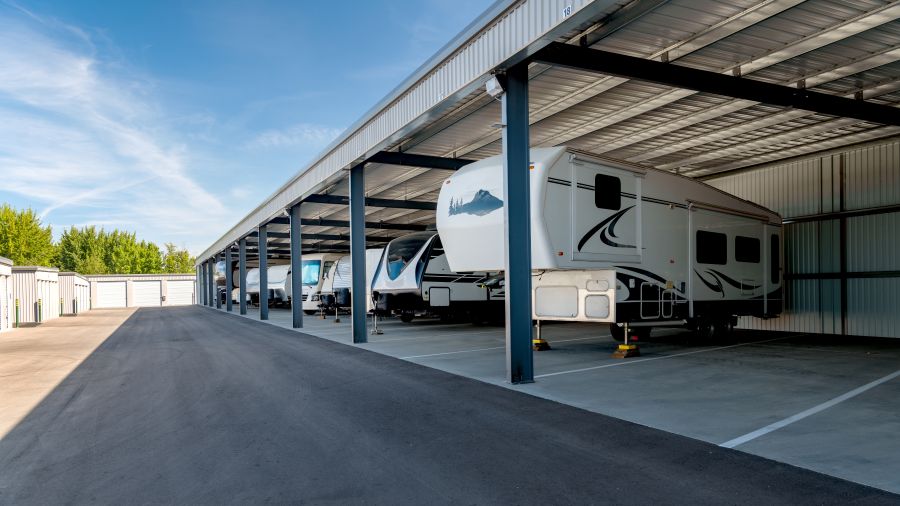
Covered outdoor storage typically places the RV beneath a roof or canopy while leaving the sides partly or fully open. It is a mid-range option that blocks direct sunlight and much of the rain or snow without the cost of a fully enclosed unit.
Pros: Reduces UV exposure and direct precipitation while remaining more affordable and easier to find than indoor storage.
Cons: The RV remains exposed to wind, humidity, airborne salt, temperature changes, pests, and wind-driven rain or snow.
Open Lot Storage
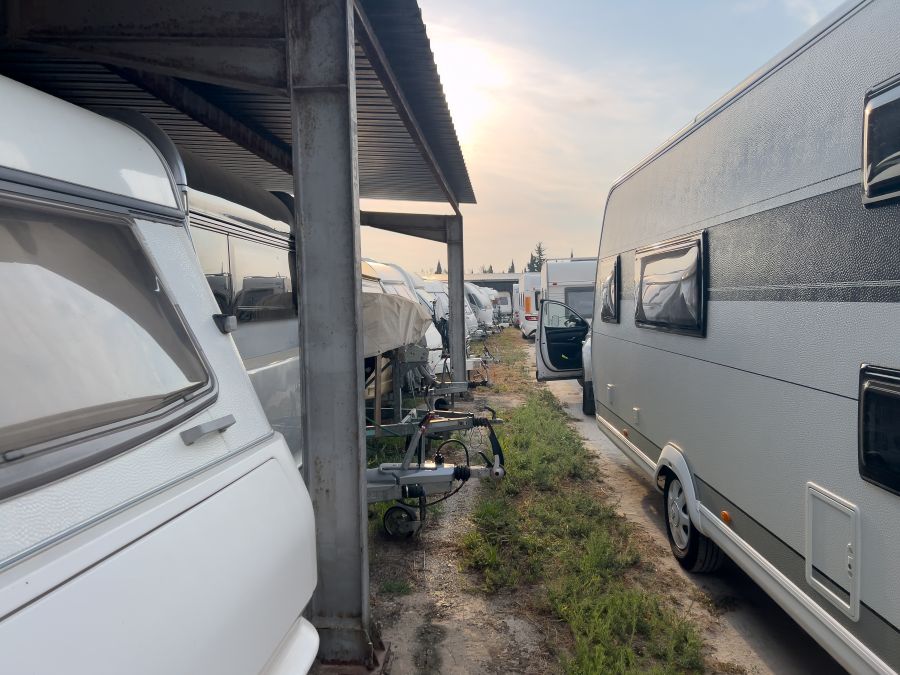
Open lot storage is generally the most budget-friendly and widely available facility option. It can work well for short-term storage, older RVs, and vehicles kept in milder climates when the owner is prepared to use suitable covers and perform regular inspections.
Pros: Usually offers the lowest monthly rate, more space choices, and straightforward access for large motorhomes and trailers.
Cons: Leaves the RV fully exposed to UV rays, precipitation, hail, debris, temperature swings, and faster deterioration of seals, tires, and exterior materials.
At-Home RV Storage
At-home storage can include a garage, dedicated RV bay, carport, driveway, side yard, or fitted RV cover. It offers convenience and eliminates a separate trip to a storage facility, but suitability depends on the property and local rules.
Pros: Provides convenient access, makes routine inspections easier, and may reduce or eliminate monthly storage fees.
Cons: Requires adequate clearance and a stable parking surface. HOA restrictions, zoning laws, local ordinances, security concerns, and neighborhood visibility may limit this option.

What to Look for in an RV Storage Facility
Size Compatibility
Confirm that the assigned space fits the RV’s complete dimensions, including height and width as well as overall length. Ask about entrance clearance, turning radius, aisle width, and room to extend mirrors or open doors. A space that technically fits may still be difficult to enter safely.
Larger models may require longer parking spaces, taller doors, and more room to maneuver. This is especially important if you own or are considering one an RV such as a Fifth wheel, since family-friendly layouts often include multiple slide-outs and spacious floor plans.
Security Features
Look for a well-maintained perimeter fence, controlled gate access, recorded surveillance, bright lighting, individual access codes, and clear visitor policies. On-site staff or regular patrols can add another layer of oversight. Ask how long video is retained and how the facility responds to alarms, damage, or suspicious activity.
Convenient Location and Access
A facility near home or along a common travel route can reduce pickup time and fuel use. Review gate hours, holiday restrictions, appointment requirements, and the process for after-hours access. Frequent travelers may value convenient access more than owners who store their RV for an entire season.
Cost and Hidden Fees
Compare the total monthly cost rather than the advertised base rate. Confirm what is included, how often rates may change, and whether the agreement renews automatically. A cheaper space can become less competitive once access, electricity, security, or required insurance charges are added.
How to Keep Your RV Secure in Storage
A secure facility is a good starting point, but there are a few extra steps you can take to better protect your RV. Use sturdy locks designed for your RV, such as a hitch lock, coupler lock, wheel lock, steering wheel lock, or upgraded door lock.
You may also want to add an alarm, motion sensor, or hidden GPS tracker. If you choose a tracker, check its battery life, cellular coverage, and subscription fees before putting the RV into storage. Whenever possible, park in a well-lit area covered by security cameras and remove valuables that could attract attention.
Before leaving the RV, take current photos and save important information such as the VIN, license plate number, and a list of valuable equipment. You should also review your RV insurance policy and storage agreement to understand what is covered in case of theft, vandalism, severe weather, or property damage.
No security feature can prevent every problem. Combining strong locks, electronic security, good documentation, and the right insurance coverage gives your RV more protection while it is stored.

How to Prepare Your RV for Storage
Clean and Empty the Interior
Remove all food, trash, toiletries, liquids, and scented items that could spoil, freeze, leak, or attract pests, such as mice. Vacuum under cushions and furniture, wipe cabinets, clean appliances, and dry every surface. Leave clean refrigerator and freezer doors slightly open to improve airflow and reduce odors. Store linens separately when moisture or pests are a concern, and cover furniture if the interior receives sunlight.
Protect Against Pests
Inspect the roof, undercarriage, utility openings, doors, vents, and compartments for gaps. Repair damaged screens and seal entry points with RV-safe materials without blocking required ventilation or appliance exhaust paths. Remove nesting materials and check the RV periodically for droppings, chewed wiring, or disturbed insulation. Avoid relying on food-based traps inside an unattended RV because they can attract pests or create odors.
Protect the Plumbing System
Drain fresh, gray, and black water tanks and clear the water lines before long-term storage. In freezing conditions, follow the RV manufacturer’s winterization procedure and use only RV-specific, non-toxic antifreeze where directed. Water heaters, filters, ice makers, washers, and other appliances may require separate steps, so consult the owner’s manuals or use a qualified RV technician when needed.
Care for the Exterior
Wash and dry the RV before storage, then apply an RV-safe wax or protectant if appropriate for its finish. Inspect the roof, seams, windows, doors, slide seals, vents, and access panels. Repair compatible sealants before water can enter. Retract awnings and slide-outs after they are clean and dry. Use a fitted, breathable RV cover rather than a loose tarp that can trap moisture or rub against the finish.
Check tire condition and inflate tires according to the RV and tire manufacturer’s storage guidance. Use tire covers to limit UV exposure, park on a firm and level surface, and use wheel chocks. Follow manufacturer instructions for stabilizing the RV and managing tire loading during extended storage.
Maintain Battery and Fuel Systems
Small electrical loads can drain a battery even when the RV appears to be turned off. Disconnect or remove the battery when appropriate, or use a compatible battery maintainer when safe power is available. Battery type matters, so follow the manufacturer’s charging, ventilation, temperature, and storage instructions. Check stored batteries regularly instead of assuming a charger will prevent every problem.
For motorized RVs and generators, add the correct fuel stabilizer when recommended and circulate it according to product and manufacturer directions. Review guidance for gasoline, diesel, propane, oil, and generator systems because storage procedures vary. Do not start an engine briefly just to let it idle unless the manufacturer recommends a complete operating routine that brings systems to proper temperature.
Seasonal and Climate-Specific RV Storage Tips
Different climates create different storage concerns, so your preparation should reflect the conditions your RV will face.
Winter and Snowy Climates
In colder areas, protecting the plumbing system should be your first priority. Complete the RV winterization process before freezing temperatures arrive, including any appliances connected to the water supply. Use RV antifreeze according to the manufacturer’s directions, since automotive antifreeze is not a safe substitute.
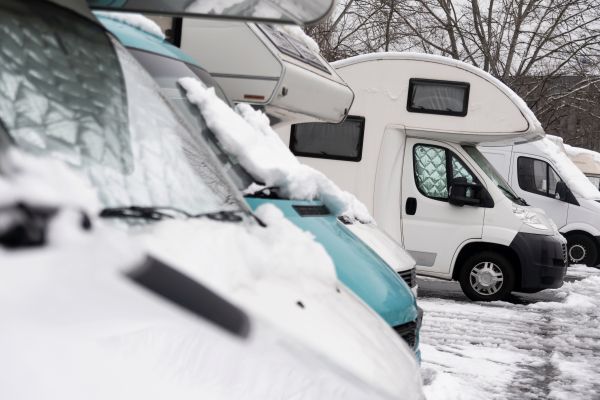
Snow, ice, and strong winds can also damage the roof or shift an exterior RV cover. Check the RV after severe weather and remove heavy buildup safely. Temperature changes may affect tire pressure, so keep the tires covered and inspect them regularly. The battery should be stored in a suitable dry location or connected to a compatible maintainer.
Hot and Sunny Climates
Intense sunlight can fade the interior and cause tires, seals, and other exterior materials to age faster. Covered storage offers valuable protection, but UV-resistant RV and tire covers can also help when covered space is unavailable. Closing the blinds or adding reflective window coverings will reduce heat and sun exposure inside the RV.
Safe ventilation can keep hot air from building up, especially when rain-protected roof vents are available. Check the roof, caulk, seals, tires, and plastic components periodically for cracking, dryness, or other signs of heat damage.
Humid and Rainy Climates
Moisture is the main concern in humid or rainy areas. Good drainage around the storage space helps keep standing water away from the RV, while proper airflow reduces the chance of mold, mildew, corrosion, and musty odors.
Moisture absorbers or a safely operated dehumidifier can help control humidity inside. Pay special attention to cabinets, mattresses, corners, fabrics, and exterior compartments, where condensation may be less noticeable. Repair damaged seals or roof areas quickly, and use a breathable cover that will not trap moisture against the exterior.
Coastal Climates
Salt in coastal air can speed up corrosion, particularly on exposed metal, electrical connections, frames, and fasteners. Indoor or covered storage can reduce exposure, but the RV will still need regular attention during extended storage.
Wash salt residue from the exterior and undercarriage before storing the RV and periodically afterward when necessary. Manufacturer-approved corrosion protection may provide additional defense. It is also wise to choose a facility with reliable drainage and clear procedures for tropical storms, high winds, or flooding.
How Long Can an RV Sit in Storage Safely?
A properly prepared RV can remain in storage for several months, but it should not be left completely unattended. The climate, storage location, battery type, fuel system, and condition of the tires can all affect how well the RV handles an extended break. Manufacturer recommendations should also guide any maintenance decisions.
Try to check the RV about once a month and after severe weather. A quick visit can help you catch moisture, pest activity, tire-pressure changes, cover damage, corrosion, or security concerns before they become expensive problems. It is also a good time to check the battery and look for early signs of fuel, seal, or tire deterioration.
Give the RV a thorough inspection before taking it back on the road. Check the roof, seals, tires, fluid levels, plumbing, battery, and safety equipment. The engine, generator, brakes, propane system, and appliances may also need attention, depending on how long the RV was stored. Contact a qualified technician if you are unsure about any part of the inspection or maintenance process.
10. Common RV Storage Mistakes
Many RV storage problems begin with small details that are easy to overlook. Avoid these common mistakes to help protect your RV.
1. Leaving food and scented products inside
Food, crumbs, toiletries, and scented products left inside the RV can attract pests, leak, or leave behind unpleasant odors. Cleaning and emptying the interior before storage is one of the simplest ways to prevent these issues.
2. Putting the RV away while it is damp
Moisture can cause serious damage to an RV. A damp interior can lead to mold, mildew, and musty odors that can be difficult to remove.
3. Using a loose or nonbreathable cover
A loose, nonbreathable tarp can trap moisture against the exterior and damage the RV’s finish. Use a properly fitted, breathable RV cover when storing your RV outdoors.
4. Skipping winterization
In cold climates, skipping winterization can result in cracked plumbing and costly repairs. Check every water line, including lines connected to appliances, before freezing temperatures arrive.
5. Neglecting the battery
A neglected battery may lose its charge while the RV sits unused. Disconnect the battery or use a battery maintainer according to the manufacturer’s recommendations.
6. Overlooking tire care
Tires can suffer when pressure, UV exposure, or the parking surface is not addressed. Check the tire pressure, use tire covers, and park the RV on a firm, level surface.
7. Ignoring the roof and seals
Small roof leaks and damaged seals should be repaired before storage because they can worsen while the RV sits unused. Inspect the roof, windows, doors, and seams for signs of wear or damage.
8. Storing slides and awnings improperly
Slides and awnings should generally be cleaned, dried, and retracted before storage. Follow the manufacturer’s instructions if your RV requires different care.
9. Choosing the wrong storage space
Confirm the RV’s full dimensions, entrance clearance, turning room, and access hours before signing an agreement. Make sure you can safely enter, park, and remove your RV when needed.
10. Overlooking security and regular inspections
Even at a secure facility, use appropriate locks, keep records of the RV, and maintain insurance coverage. Visit periodically, and do not wait until the day before a trip to check for damage or overdue maintenance.
How to Choose the Best RV Storage Option
Begin by considering the weather conditions your RV will face. Indoor or covered storage may be worth the added cost in areas with intense sun, hail, heavy snow, coastal air, or persistent humidity. In a mild climate, a secure open lot and a fitted cover may provide enough protection for an older RV or a shorter storage period.
Your budget matters, but the lowest monthly rate may not provide the best overall value. Think about the RV’s age, condition, and value, along with how often you need access. A nearby facility with flexible hours may be more useful for frequent travelers, while stronger weather protection may be the priority for a newer RV stored for several months.
Visit the facility before making a final decision. Inspect the assigned space, review the security measures, and ask about access rules, amenities, insurance requirements, and additional fees. Comparing the complete cost and level of protection will help you choose a storage option that fits both your RV and your travel plans.
Protect Your RV With the Right Storage Plan
The best storage choice is one that fits your RV, budget, local climate, and travel habits. It should provide enough protection without making access inconvenient or adding services you do not need.
Proper preparation matters just as much as the storage space itself. Clean the RV, take care of its major systems, and check on it periodically while it is stored. Once you know what type of protection you need, search for an RV storage facility near you that fits your budget and access preferences. A little attention now can help prevent expensive damage and make it easier to get back on the road when your next trip arrives.