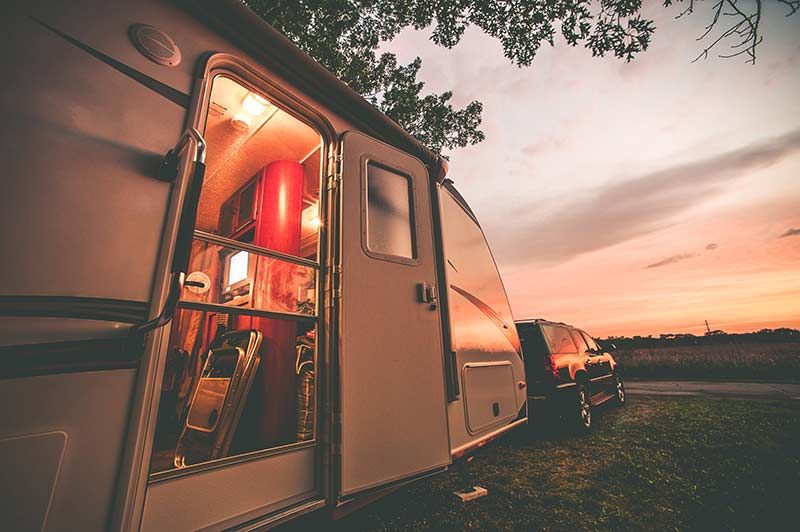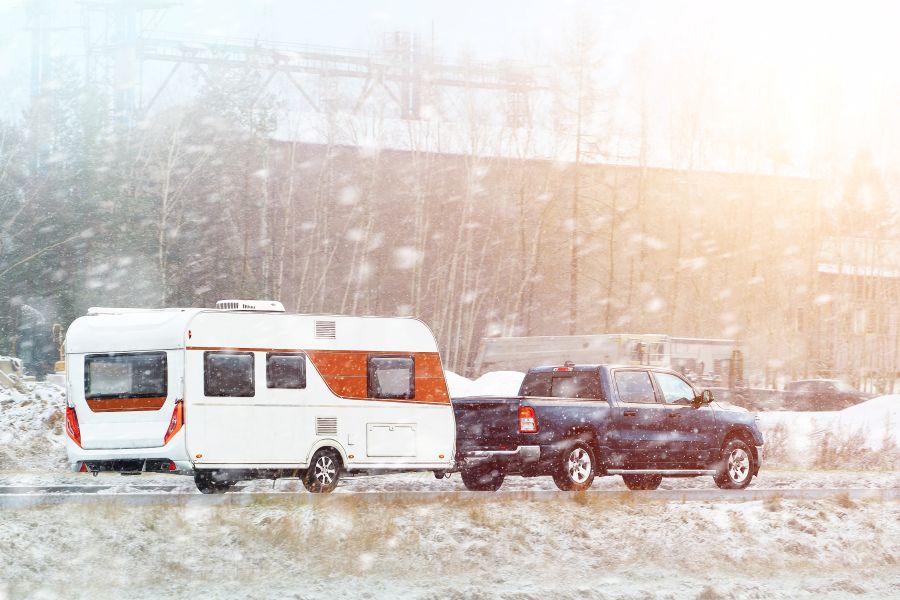
Cold winters can be tough on you, and they’re even tougher on an unprepared RV.
Winterizing a travel trailer simply means getting it ready to face freezing temperatures while it sits parked for the season. You’re protecting your RV’s systems so they don’t freeze, crack, or wear out while it’s not in use. That usually includes draining the water system, adding RV-safe antifreeze or blowing out the lines, and giving the trailer a quick checkup before it settles in for winter.
Cold weather is especially hard on anything that holds water. If it freezes in your lines, fittings, water heater, or pump, it can expand, crack parts, and cause leaks you will not spot until spring. Tanks, seals, and fixtures can also get brittle in the cold. A quick winterization routine now helps you dodge pricey repairs later and keeps your trailer ready when camping season rolls back around.
When to Winterize your Travel Trailer
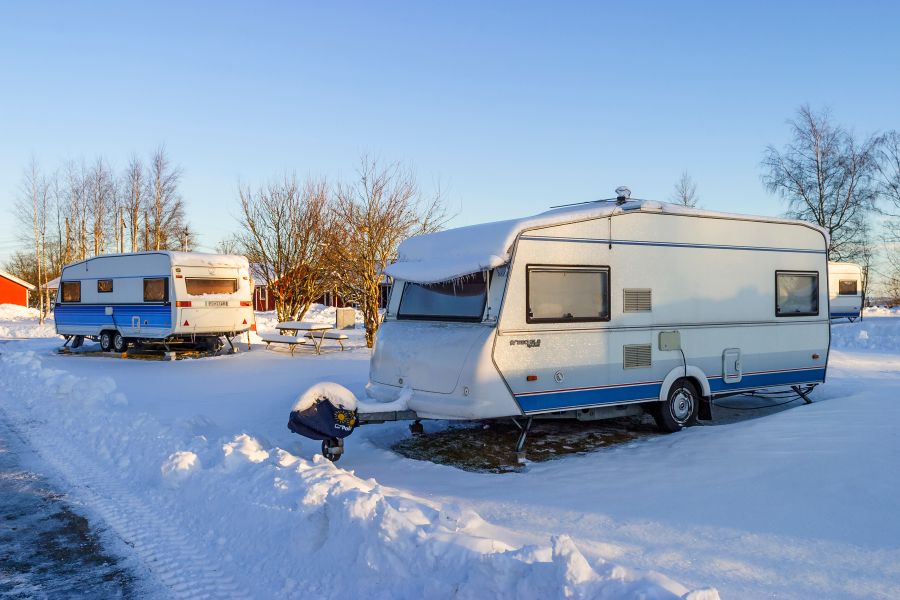
When it comes to winterizing your travel trailer, timing matters more than choosing a specific date on the calendar. Every region cools down at a different pace, and your own travel plans play a big role too. The goal is to prepare your trailer before freezing temperatures arrive, not after they’ve already taken a toll on your plumbing and fixtures.
A few factors help determine the right time to get it done. Climate is a big one. In northern states or higher elevations, cold weather hits earlier and tends to last longer, so winterization usually needs to happen sooner. Southern areas may buy a bit more time, but occasional freeze snaps can still catch you off guard. Whether your trailer is stored in a city, a rural area, indoors, outdoors, heated, or unheated also affects the timeline. A trailer sitting outside without protection needs attention earlier than one stored in a garage or insulated building.
Your usage habits matter too. If you plan to do some winter RV camping, you may delay full winterization, but you’ll still need to prepare carefully between trips.
As a general rule, winterize when overnight temps consistently drop near or below 32°F. It’s also smart to go ahead and winterize when you know you won’t be using the trailer for several weeks or months. Acting early ensures your travel trailer is protected, no matter how unpredictable the weather gets.
When overnight temps consistently approach or fall below 32°F
If the forecast keeps dipping near or below freezing at night, it is time to winterize. You might get away with one random cold snap, but repeated freezes can leave water sitting in lines, fittings, or tanks long enough to cause damage. Think of that first stretch of regularly cold nights as your cue to protect the trailer before ice has a chance to form where you do not want it.
When you know you will not be using the travel trailer for several weeks or months
If your camping calendar is empty for a while, treat that as your other big signal. Even if the weather is still mild, go ahead and prepare your travel trailer for storage. Cold fronts can move in fast, especially later in the season, and it is easier to winterize on your schedule than scramble after the first hard freeze.
The Two Main Types of Winterization: Wet vs Dry Methods
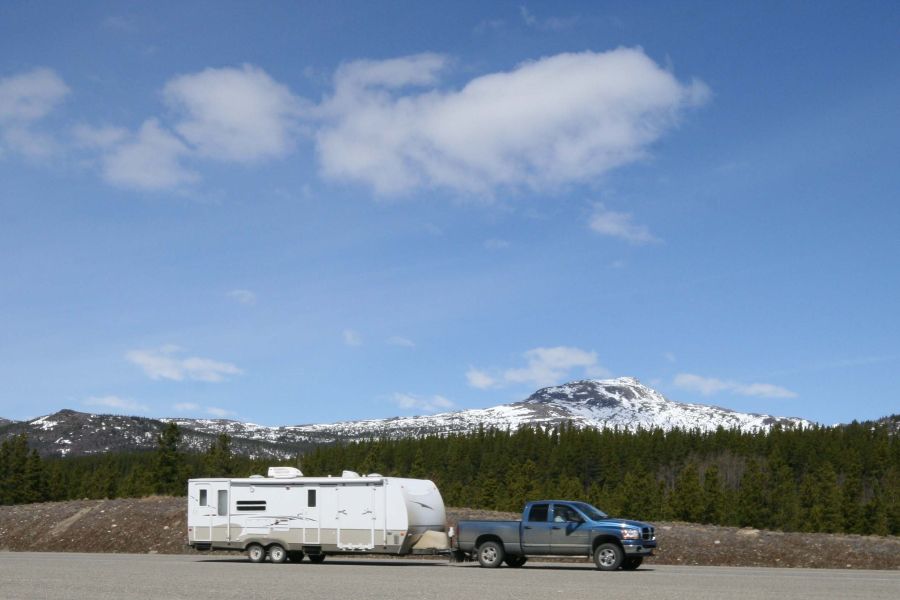
When you winterize your travel trailer, there are two main ways to protect the plumbing: the wet method and the dry method.
Wet Method
With the wet method, you use non-toxic RV antifreeze to fill and protect the water lines. The antifreeze pushes out any remaining water and keeps it from freezing inside your pipes and fixtures.
Dry Method
With the dry method, you drain the system and then use compressed air to blow out the water lines. The goal is to remove as much water as possible so there is nothing left inside to freeze and expand.
Both methods are designed to prevent freeze damage in your plumbing. A lot of RV owners even use a hybrid approach, blowing out the lines first and then adding a bit of RV antifreeze to drains and tanks for extra peace of mind.
Wet Method (Antifreeze)
How the Wet Method Works
Start by draining your tanks and water heater. Once everything is empty, bypass the water heater so you don’t waste gallons of antifreeze filling it. Then use the RV’s water pump to draw non-toxic RV antifreeze into the system. As it moves through the plumbing, antifreeze will flow out of each faucet, the shower, the toilet, and any other fixtures, pushing out any leftover water and protecting the lines from freezing.
- Simple and straightforward
- Easy to confirm when the system is protected because pink antifreeze appears at each faucet
- Requires very little specialized equipment
- Uses more antifreeze
- Requires a bit more flushing and cleanup in the spring
Dry Method (Blow-Out)
How the Wet Method Works
Drain the tanks and open your low-point drains to remove as much water as possible. Then attach an air compressor with a blow-out plug to the city water inlet. Gently pressurize the system to force air through the plumbing. As you open each faucet and fixture, the remaining water will spray out until the lines run clear.
- Uses little to no antifreeze in the water lines
- Popular for long-term or very cold storage
- Reduces the amount of flushing needed in the spring
- Requires access to an air compressor and careful pressure management
- Easier to miss pockets of water if you’re not thorough
Hybrid Approach
Some RV owners combine both methods for added peace of mind. Start by blowing out the lines to remove as much water as possible. After that, add a small amount of RV antifreeze to the P-traps, drains, and holding tanks. This protects the area’s air can’t fully clear and keeps valves and seals from freezing or drying out over the winter.
How to Choose the Right Method
Choosing between the wet, dry, or hybrid method comes down to a few simple factors.
Climate
In extremely cold regions, the wet or hybrid method usually offers more peace of mind because antifreeze stays in the lines even during long, deep freezes. In milder climates, where hard freezes are rare and short-lived, a careful dry method is often enough.
Comfort Level with Tools
If you are not comfortable using an air compressor or adjusting pressure, the wet method is the safer, more beginner-friendly option. It is easier to follow step by step and simpler to see when the system is fully protected.
Preference for Simplicity vs. Conserving Antifreeze
If you want the most straightforward process, the wet method wins: pump in antifreeze until you see pink and you are done. If you would rather use as little antifreeze as possible and do a bit more hands-on work, the dry or hybrid method is a better fit.
Travel Trailer Winterization Prep
Exterior
Start with a good wash to remove dirt, road grime, and tree sap. A clean exterior makes it easier to spot small problems that might turn into big ones later. Once it is dry, walk around your travel trailer and inspect the roof, seams, windows, and doors for any cracks, gaps, or peeling sealant. If you see anything suspicious, reseal or repair it now so water and pests stay out all winter. While you are outside, check your exterior vents, covers, and access doors to be sure they are secure and in good shape.
Interior
Inside the trailer, clear out anything that might attract critters. Remove all food, snacks, spices, and even crumbs in drawers or cabinets. Empty and clean the fridge and freezer, then prop the doors open slightly so air can circulate and odors do not build up. Give sinks, countertops, and bathroom surfaces a quick clean so you are not sealing in moisture or smells. If you have lots of soft goods, you can remove some for storage or prop seat cushions and mattresses up a bit to improve airflow and cut down on mustiness.
Power and Propane
Before you move on to winterizing the systems, take a moment to deal with power and propane. Turn off the propane at the tank so no gas is flowing while the trailer is in storage. Make sure appliances and the water heater are shut down on both the gas and electric side. With those steps done, your trailer is cleaner, safer, and ready for the rest of the winterization process.
Prep Your Plumbing System
No matter which winterization method you choose, wet, dry, or hybrid, there are a few steps that every RV owner needs to take before getting started. These steps help remove as much water as possible and prepare the plumbing system for either antifreeze or compressed air.
Drain Systems
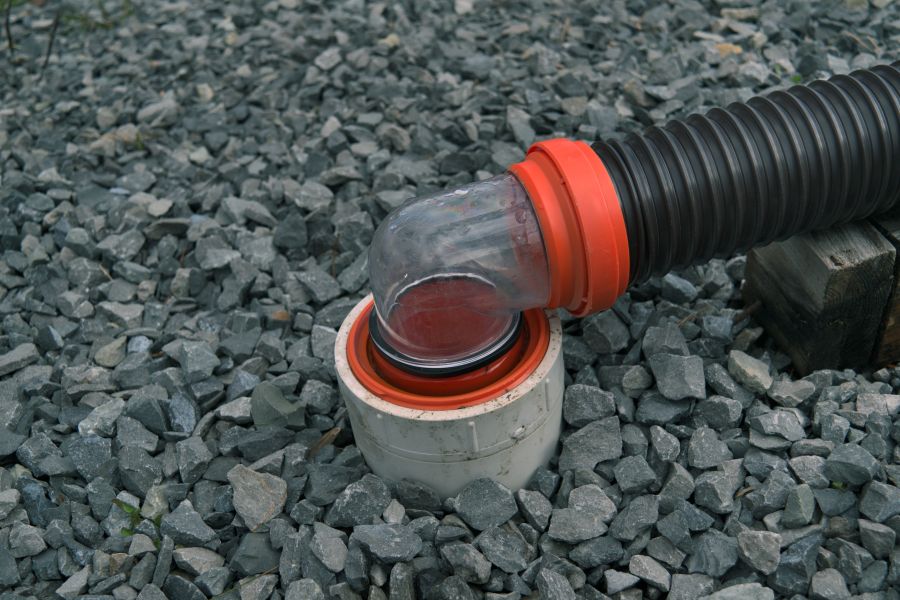
Begin by turning off the water pump so it is not pulling water while you work. Open all faucetsto let the remaining water run out of the lines. Do not forget the shower, outside shower (if you have one), and any additional fixtures. Flush the toilet to clear water from the bowl and the attached line. Next, open the low-point drains for both the hot and cold water lines to release all the water sitting in your plumbing system. Drain the fresh water tank, then move on to the water heater. Make sure it is completely turned off and has cooled down before pulling the drain plug or anode rod to empty it safely.
Flush Water Tanks
Once the plumbing is drained, empty and flush both the black and grey water tanks. This keeps waste and odors from settling in during storage. If you want added protection, pour a small amount of RV antifreeze into each tank after dumping. This helps protect the dump valves and any water that might still be sitting in the bottom of the tanks.
Steps to Winterize a Travel Trailer
Wet Method: Plumbing With RV Antifreeze
If you choose the wet method to winterize a travel trailer, you’ll be using non-toxic RV antifreeze to fully protect your plumbing system. Once the common prep steps are done, here’s how to move through the process.
Bypass the Water Heater
Start by engaging the water heater bypass valves, or install a bypass kit if your trailer doesn’t already have one. This step prevents antifreeze from filling the water heater tank, which would waste several unnecessary gallons. Double-check the valves to be sure the antifreeze will only move through the plumbing lines, not the heater.
Use the Pump to Pull Antifreeze
Next, connect a water pump converter kit or use a hand pump at the city water inlet. Place the pickup tube into your container of RV antifreeze so the pump can pull it directly from the bottle. Turn on the water pump and let it begin circulating the antifreeze through the system.
Run Antifreeze Through Fixtures
Start with the faucet farthest from the pump to keep the process organized. Open the hot side until you see pink antifreeze flowing, then close it. Repeat with the cold side. Move through each fixture the same way, including the kitchen sink, bathroom sink, shower or tub, and outside shower if your trailer has one. Flush the toilet until pink antifreeze appears in the bowl to make sure the line feeding it is fully protected.
Protect Drains and Traps
Once all fixtures are winterized, pour a small amount of antifreeze into every drain to protect the P-traps from freezing. Add a bit to the toilet bowl as well and pour some into the black and grey tanks if you haven’t already. This protects valves and any small amount of water that may still be sitting in the tank bottoms.
Final Checks
When everything is done, close all faucets and shut off the water pump. Make a note that the trailer has been winterized so you don’t accidentally run water into the system before spring. This simple step wraps up the wet method and keeps your trailer’s plumbing safe all winter long.
Dry Method: Blowing Out the Water Lines
If you prefer a method that uses little to no antifreeze in the plumbing, the dry method is a solid option. Using compressed air, you’ll clear the lines so nothing is left inside to freeze. After completing the common prep steps, here’s how to work through it.
After Draining Tanks and Opening Low-Point Drains
Once the tanks and lines have emptied, close the low-point drains to prepare the system for air pressure. Attach a blow-out plug to the city water inlet. Once you’ve connected your air compressor, set the pressure to safe levels, typically between 30 and 50 PSI, depending on your travel trailer’s manufacturer.
Blow Out the System
Start with the fixture farthest from the water inlet. Open one faucet and let the air push water out until it changes from a mist to nothing but air. Do this for both the hot and cold sides before moving to the next fixture. Work your way through the kitchen sink, bathroom sink, shower or tub, outside shower, and the toilet. This step ensures the lines are as dry as possible throughout the trailer.
Protect Drains and Traps With Antifreeze
Even with the dry method, it’s important to protect areas air cannot clear. Pour a small amount of RV antifreeze into each drain to shield the P-traps from freezing. Add some to the toilet bowl as well, and pour a bit into the holding tanks and valves to protect any remaining moisture and keep seals from drying out.
Final Steps
When you’re finished, disconnect the air compressor and remove the blow-out plug. Close all faucets and the city water inlet. Double-check that the water heater is drained and, if your setup calls for it, properly bypassed. With that, your travel trailer’s water system is safely winterized using the dry method.
FAQs About How to Winterize a Travel Trailer
Do I really need to winterize if I live in a mild climate?
Yes. Even in warmer regions, a single freezing night can damage your plumbing. Basic winterization takes little time and acts as inexpensive insurance against cracked lines, fittings, or valves.
How many gallons of RV antifreeze do I need?
Most smaller travel trailers use around 2–3 gallons, while larger units may need 3–4 or more. The exact amount depends on your floorplan, plumbing layout, and whether you’re using the wet or hybrid method.
Can I use automotive antifreeze in my trailer’s water lines?
No. Automotive antifreeze is toxic and should never go into a freshwater system. Always use non-toxic RV antifreeze designed specifically for drinking water plumbing.
Is it better to use the wet method or the dry method?
Both work. The wet method is simpler and easier for beginners, while the dry method uses less antifreeze but requires an air compressor and a bit more precision. Many owners choose based on climate and comfort level, and some prefer a hybrid approach for extra protection.
How long does it take to winterize a travel trailer?
A first-timer may need an hour or so, especially if they’re learning the layout of their water lines. Once you’ve done it a few times, the process usually takes 30 minutes or less.
Can I still camp during winter after I winterize?
You can, but a fully winterized system isn’t set up for normal water use. Many winter campers de-winterize for a trip, use the trailer as usual, and then winterize again when they return home.
What is involved in de-winterizing in spring?
De-winterizing typically includes flushing antifreeze from the lines, sanitizing the fresh water system, refilling tanks, reinstalling water filters, reconnecting the battery and propane, and checking for leaks or worn seals.
Why It Pays to Winterize Your Travel Trailer
Taking time to learn how to properly winterize a travel trailer is one of the best ways to protect your investment. A little preparation now helps you avoid cracked lines, damaged tanks, surprise leaks, and the kind of repair bills that can eat into your camping budget. It also makes spring setup faster and smoother, so you can spend more time planning trips and less time fixing problems.
If this season has you dreaming about upgrading, downsizing, or finding your first rig, it’s a great time to start shopping. Browse new and used travel trailers on to compare floorplans, prices, and styles, and find the travel trailer or motorhome that fits your next adventure.